Discussion vs. Dialogue: Which One Builds Better Leaders?

Are you aiming to win?
Or are you aiming to understand?
That question right there can change the course of anything from a meeting to a team dynamic to your company culture.
Knowing the difference between discussion vs dialogue is more than just semantics. It’s about choosing the right tool for the right moment.
Because not every problem needs a debate, and not every conversation needs a decision either.
Let’s dig into the difference between dialogue and discussion. In the process, we’ll be exploring why it matters and how great leaders know when to speak and when to listen…and when to just let the silence do the heavy lifting.
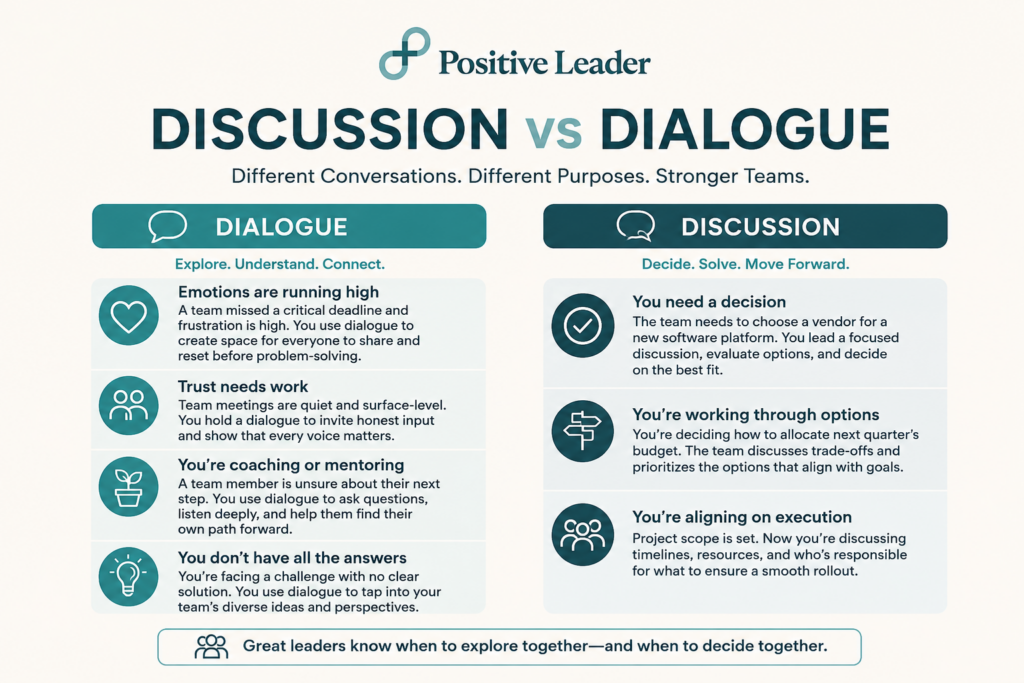
Discussion vs. Dialogue: Core Differences
If discussion is the boardroom version of a tennis match, dialogue is more like a slow dance.
Both involve back-and-forth, but the goals, the rhythm, and the vibe are completely different.
Here’s a quick breakdown of dialogue vs discussion and why knowing the difference makes you a sharper leader:
| Discussion | Dialogue | |
| Purpose | To share opinions or make a decision | To explore, listen, and connect |
| Tone | Persuasive and analytical | Curious and reflective |
| Outcome | Decision or clear conclusion | Deeper understanding or alignment |
| Examples | Team debates and project planning | Feedback sessions and coaching convos |
A discussion is where folks lay out their ideas and aim for a clear decision. It’s structured, usually time-bound, and it’s also usually meant to drive something forward. Think: staff meetings, strategy sessions, project planning, etc.
A dialogue, on the other hand, is slower and softer, but it’s also just as powerful. It’s about learning from each other so you can become more effective at understanding motivations and making room for honesty. You’ll find it in tough feedback conversations, which will usually occur during team check-ins or one-on-ones that go beyond the task list.
What if you confuse the two? Yeah…things can get awkward. Have you ever watched a leader try to “win” a coaching session like it’s a debate club? Or have you watched a team grow frustrated during a meeting that was supposed to be exploratory but ended in a rushed vote?
Both of those are examples of debate, discussion, and dialogue tangled in the wrong order!
When to Use Each Approach
Use Dialogue when:
- Emotions are running high
- Regardless of whether there’s been a conflict or some honest frustration bubbling up, a dialogue helps cool the temperature so you can bring real connection into the conversation.
- Example: “I know things are moving fast, but before we look at the timeline, how are you actually feeling about these changes?”
- Trust needs work
- If your team is quiet in meetings or hesitant to speak up, chances are they’re not feeling heard. Dialogue opens the floor for more than just updates. It makes space for feelings, too.
- Example: “I know we usually just run through status updates, but I’d really like to know: what’s one thing I could do to better support you right now?”
- You’re coaching or mentoring
- Real growth doesn’t come from being told what to do; it comes from discovery. That’s what dialogue allows. Ask questions. Be present. Let your team process out loud.
- Example: “I have a few thoughts, but I’m really curious to hear your take—how would you tackle this roadblock?”
- You don’t have all the answers
- Newsflash: leaders aren’t supposed to know everything. Sometimes the best move is to step back and invite ideas in. Dialogue is exactly what turns a group of individuals into a team.
- Example: “To be honest, I don’t have a clear answer here either. What are your thoughts on the best way forward?”
Use Discussion when:
- You need a decision
- Got to pick a direction, solve a problem, or assign responsibilities? This is where discussion shines. Just keep it focused and goal-oriented.
- Example: “We’ve got twenty minutes to wrap this up, let’s prioritize our top two budget items and get it on the calendar.”
- You’re working through options
- Discussion works great when you’re evaluating multiple paths. You want different perspectives, yes, but you also want to land somewhere productive.
- Example: “Let’s run through the pros and cons of these platforms and pick the one that actually fits our workflow.”
- You’re aligning on execution
- If it’s time to talk about things like deadlines, allocation of resources, or who’s doing what, discussion naturally provides structure.
- “Now that we’ve agreed on the strategy, let’s figure out who’s doing what and set the final deadlines.”
A good leader knows that you might start in dialogue to build understanding, and then shift to discussion to make a decision before maybe even dipping into debate when ideas need challenging. The ‘trick’ is to read the room and adjust as needed.
Final Thought: Great Leaders Know When to Shift Gears
Leadership isn’t about being the loudest voice or the fastest thinker. It’s more about creating space for the right kind of conversation, and at the right time and with the right people.
Some moments call for clarity. Others call for connection. And the best leaders? They know how to switch between the two without losing momentum.
So next time you walk into a meeting, ask yourself: are you there to decide or to understand?
That one question can literally change everything.
Now with all that said, are you curious about how you show up in conversations? Try the Positive Assessment Tool (PAT℠). It gives you a clear picture of your leadership strengths, how you naturally communicate, and where you might need to shift gears. If you want to delegate better, connect deeper with others, or just understand your team a little more, PAT’s a smart place to start.